
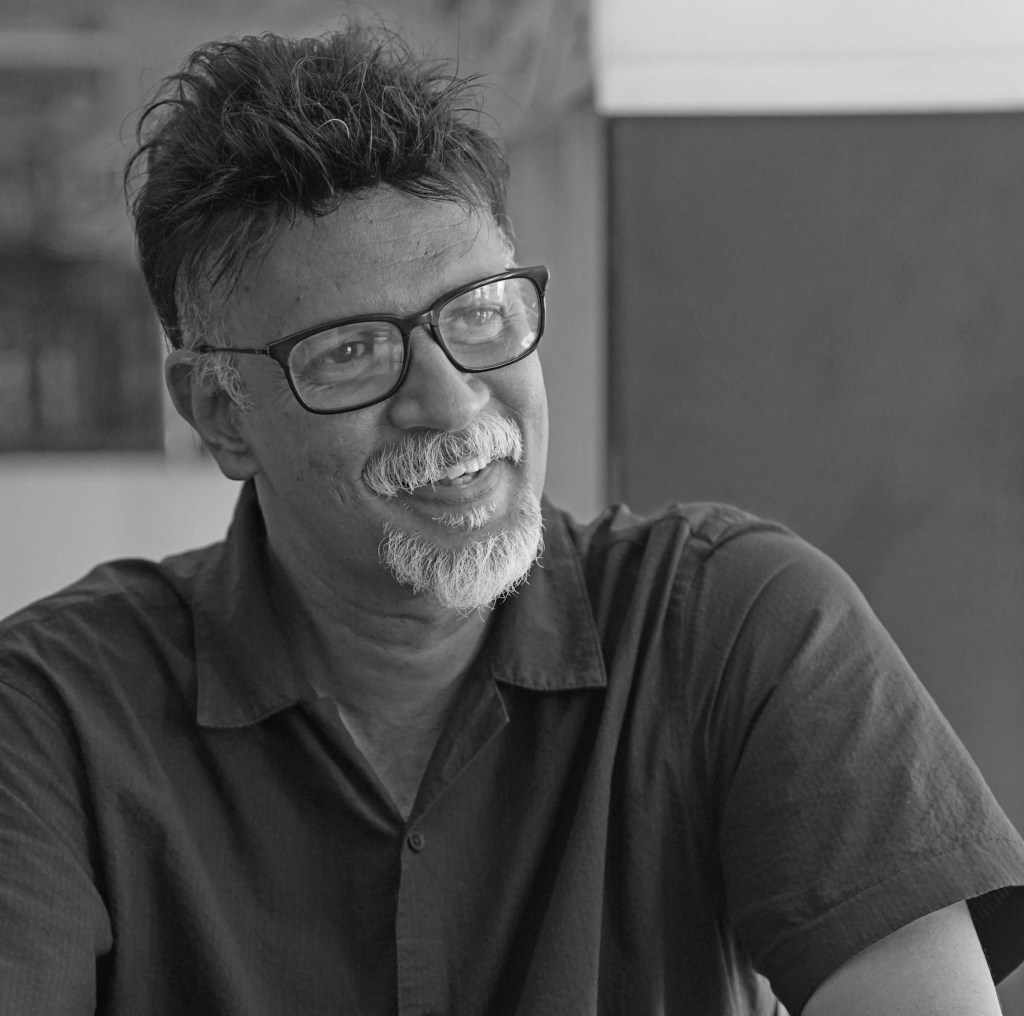
‘I am a graduate in B.Ed.’
When Amit Tiwari, a young security guard whose duty is to be watchful at the heritage temple site Kandariya Mahadeva Temple in Khajuraho told me about his plight, I compelled myself to pause from marveling at the spectacular stone temples.
Thin figure Amit told me ‘My B.Ed batch had 26 students and only two were selected to state aid jobs.’
I held Amit’s shoulder and asked ‘Why only those two?’
Amit who works for a security services agency said ‘Those two belong to backward communities, eligible for reservation quota as per state’s employment scheme…uh…we brahmins are overlooked and not considered even if we score high marks in the State Service Exams (SSE) of Madhya Pradesh. This Aarakshan system (reservation for employment) is a joke.’
A fellow security guard who was standing with Amit was equally vocal against the employment policy of the state.
I asked Amit ‘After your duty what do you do?’
Amit smiled at me and said ‘I reach home and by night I study to fulfill my hope, I prepare for the next SSC.’
Amit concealed his emotional outburst with a smile.
Amit, son of Shakuntala has two sisters – Rekha and Sangeetha.
Amit’s strongest support is his wife Kushboo.
I asked Amit ‘Do you want to have tea with me?’
Amit politely refused and said ‘I am not supposed to move from this spot, I need to be very vigilant and watch the visitors on this site.’
I admire the spirit and ambition of a youth who is willing to adapt and thrive.
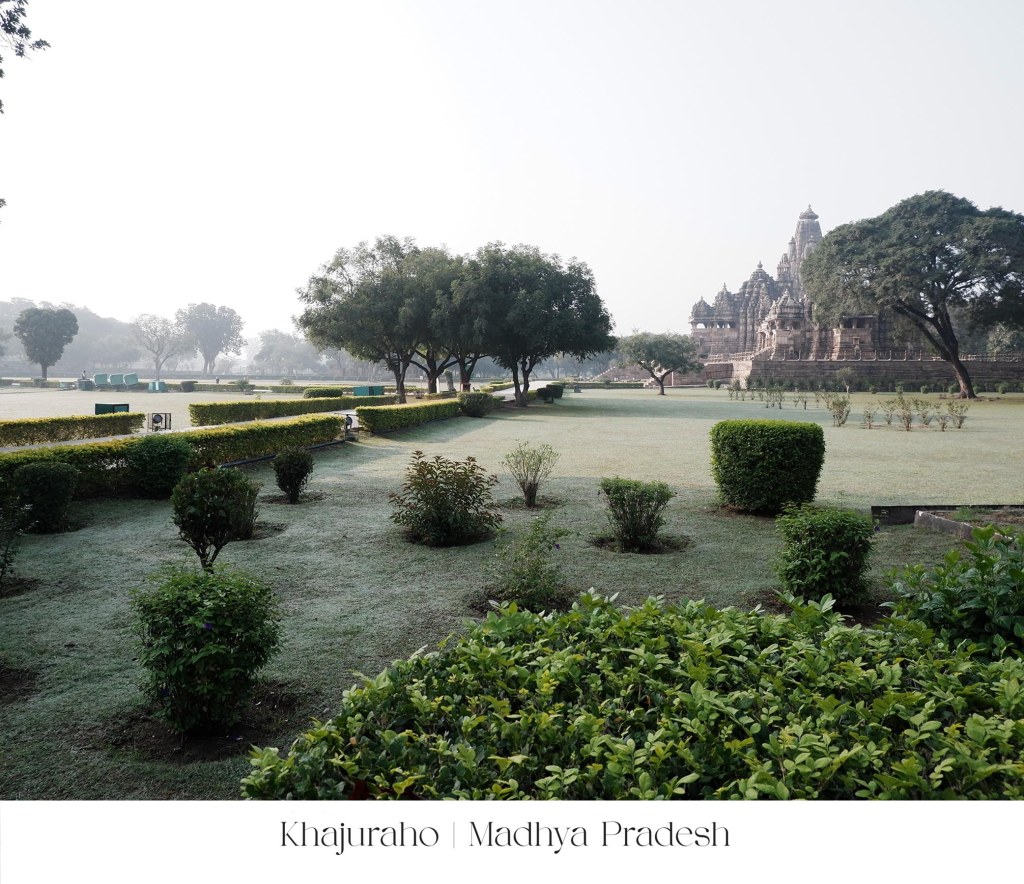
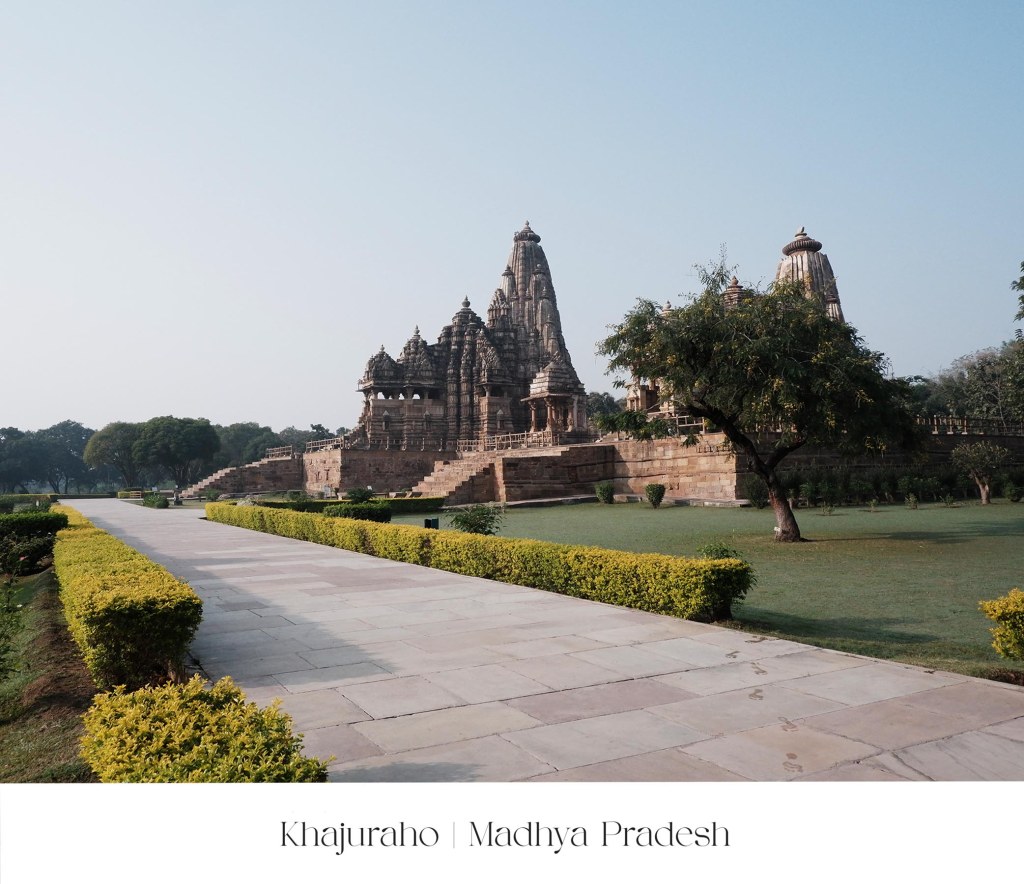
Khajuraho | Madhya Pradesh
About the heritage site:- Kandariya Mahadeva Temple
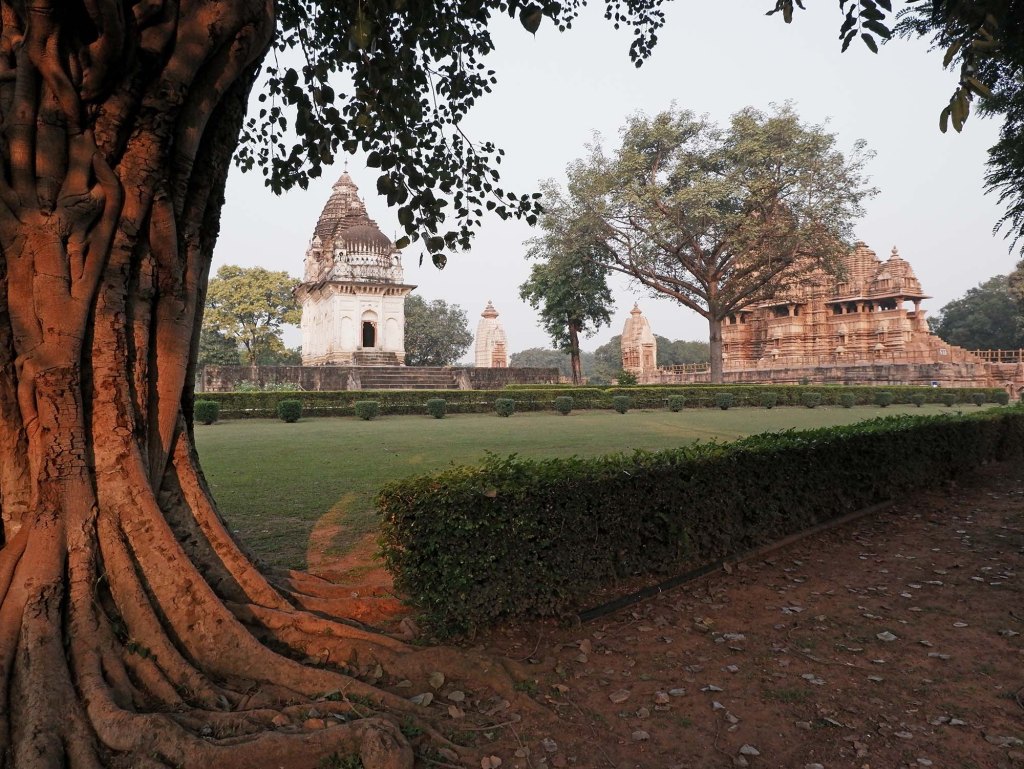
This is a Hindu temple, the largest and tallest of the surviving temples at the temple site of Khajuraho, in central India. It is dedicated to Shiva, who is represented by the linga in the main shrine known as the womb chamber located at the heart of the building.
Hindu temples are designed along axis points that extend from the heart of the chamber upward through the line of the main tower (shikara) and outward in the cardinal directions. The main deity image is located in the central shrine, and the outside of the shrine and the exterior of the temple are richly decorated with sculptures. In some design schemes, one views the entire range of existence looking upwards from bottom to top, with plant and animal life near the bottom and the gods and semi-divine beings in various sculptural registers extending towards the heavens at the temple’s summit. The steeply rising superstructure, and overall mountainous form of this temple are references to the mythical source of creation, the primordial Mount Meru, around which the world came into being.
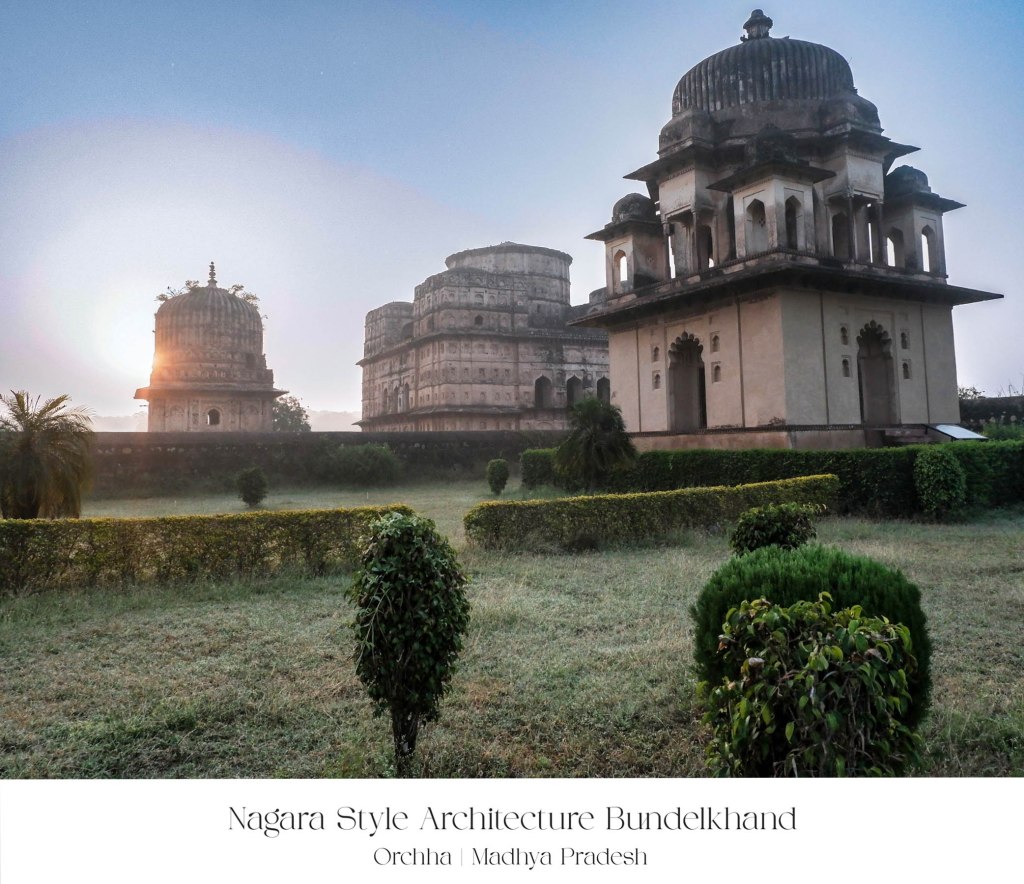
The Khajuraho temples sit on very large platforms, and it is thought that originally there may have been a lake here beneath them. An association between temple sites and water is appropriate, as an essential part of Hindu worship is ritual bathing, required by the devout in order to purify themselves before entering the sacred area of the temple.The majority of Hindu temples in north and central India were built between the Gupta period (roughly 300–700 CE) and the 1100s. The temples at Khajuraho are considered among the highpoints of classical Hindu architecture in the northern (nagara) style .
 Mother Earth Stories